The Age of AI Micro-Dramas Has Arrived: One Creator, One Studio, Hit Series in Minutes
Want to read in a language you're more familiar with?
AI-powered tools like SenseTime’s Seko 2.0 are turning micro-drama production into a low-cost, one-person creative endeavor—reshaping how stories are written, produced, and shared.
Is the era of ultra-low-cost, self-produced hit dramas finally here?
China’s micro-drama industry is entering a period of explosive growth. Last year, the market size of short-form dramas surpassed box office revenues for the first time—an unmistakable signal that audience attention and content economics are shifting. At the same time, AI is rapidly reshaping the industry, penetrating the entire creation pipeline with a clear goal: minute-level output and an industrialized “one-person studio” production model.
Yet for viewers, many AI-generated dramas still fall short. Lip-sync mismatches, logical gaps in storytelling, and structural inconsistencies—especially in fully AI-driven productions—remain common complaints. Overlong scripts often spiral out of control, characters contradict themselves, and settings lose continuity. The result is a familiar experience: audiences “complain while binge-watching,” wishing they could rewrite the script themselves.
That frustration may now have an answer. At its product launch week, SenseTime unveiled Seko 2.0, a major upgrade to what it calls the industry’s first integrated AI agent for writing and producing multi-episode dramas. Designed to directly address these pain points, Seko 2.0 emphasizes high efficiency and low barriers to entry—allowing individual creators to instantly become a full-fledged production team.Since its launch in July, Seko has quickly become a staple tool for video creators. Its first major showcase project, Wanxin Scheme, co-produced with a professional creative team, topped Douyin’s AI micro-drama rankings by a wide margin, surpassing 2 million in popularity.
From Idea to Screen: Seko 2.0 Brings AI Micro-Drama Creation One Step Closer
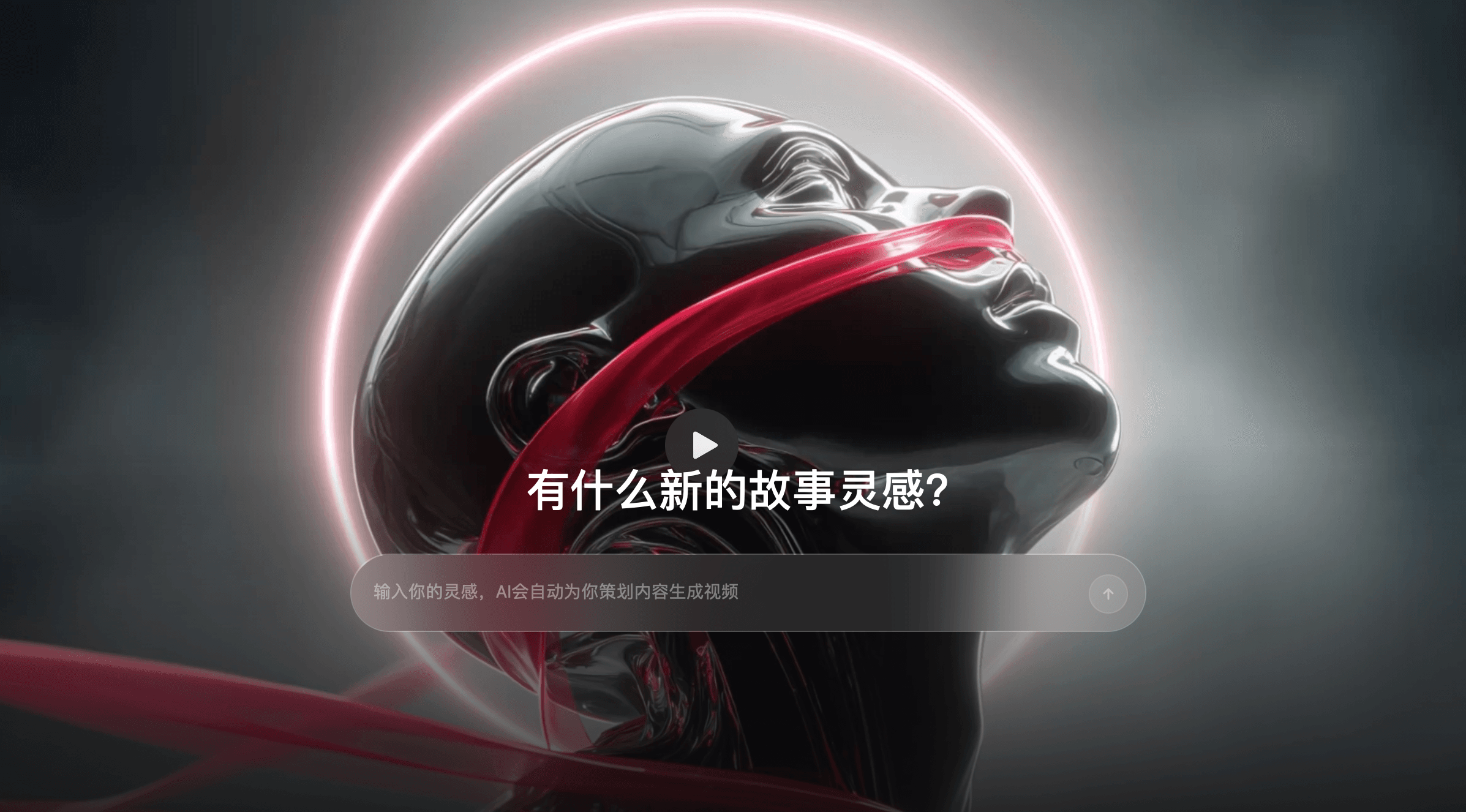
Seko 2.0 centers on a core promise: one-step content creation. The update focuses on three major capabilities—an upgraded UI, continuous script generation for up to 100 episodes, and intelligent agent orchestration. The new interface offers a more immersive creative experience, enabling users to interactively edit characters, storyboards, scenes, images, and shots throughout the generation process. Users can select prompt inspirations, upload scripts, choose models, define visual styles, and add characters directly within the chat interface.
A key highlight is the multi-episode agent, which allows creators to generate long-form series across multiple episodes. The agent analyzes the script, produces a multi-episode outline, and ensures consistent character and scene design throughout. Compared with Seko 1.0, creators now have precise control over every character and environment within a single editing interface.
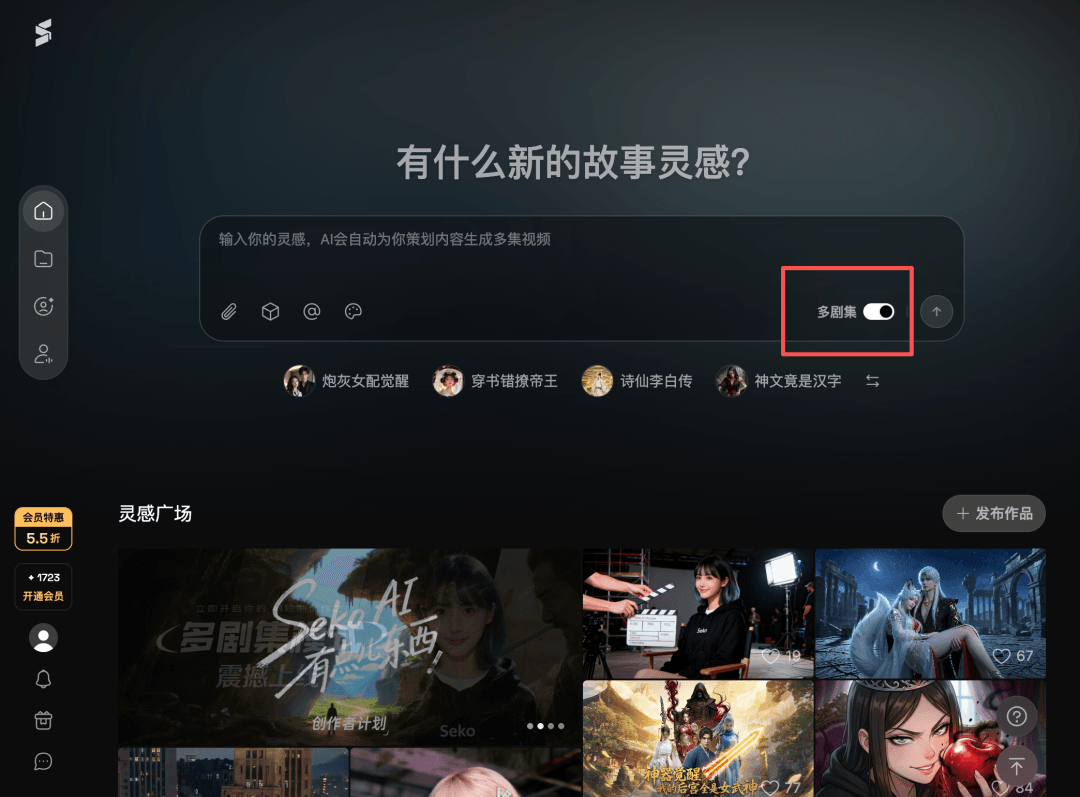 Episodes can be generated sequentially, inheriting story logic and visual continuity from previous chapters. Fine-grained adjustments—from facial expressions and lip movements to individual frames—are all editable.
In practice, Seko 2.0 can support continuous creation of scripts spanning up to 100 episodes. Even non-professional users can quickly turn ideas into finished videos. In testing, a full one-minute AI micro-drama episode—from concept to export—can be completed in under 15 minutes using Seko alone.
Episodes can be generated sequentially, inheriting story logic and visual continuity from previous chapters. Fine-grained adjustments—from facial expressions and lip movements to individual frames—are all editable.
In practice, Seko 2.0 can support continuous creation of scripts spanning up to 100 episodes. Even non-professional users can quickly turn ideas into finished videos. In testing, a full one-minute AI micro-drama episode—from concept to export—can be completed in under 15 minutes using Seko alone.
The results show strong visual consistency across scenes, natural facial expressions, and coherent storytelling—crucial improvements for serialized content and professional creators alike.
Four Core Technologies Powering Consistency, Accuracy, and Speed
Behind Seko 2.0’s performance is a comprehensive technical upgrade.
First is SekoIDX, a character consistency technology built on optimized diffusion models. It balances visual similarity with prompt responsiveness, preventing the “face-swapping” artifacts that often break immersion in AI-generated video.
Second is SekoTalk, the industry’s first solution supporting lip-sync for more than two speakers simultaneously. Built on SenseTime’s real-time speech-driven digital human technology, it delivers up to 25 FPS generation on an 8-GPU setup, with first-frame latency as low as 3.5 seconds—while maintaining stable, multilingual lip-sync across long dialogues.
Third is Phased DMD distillation, which dramatically reduces the cost of multi-episode generation. The approach preserves motion quality and emotional expression while cutting inference costs by up to 25×, enabling scalable production without sacrificing realism. Seko 2.0 also supports cost-efficient deployment on Cambricon chips.
Finally, SenseTime’s open-source LightX2V inference framework enables real-time video generation under low-resource conditions. Designed with native optimizations such as low-bit quantization and sparse attention, LightX2V has surpassed 3.5 million downloads to date.
Together, these technologies allow Seko 2.0 to balance quality, speed, and cost—delivering minute-level output while maintaining narrative and visual coherence across long series.
Toward a Mass-Creator Era for AI Micro-Dramas
Seko’s evolution reflects a broader shift in AI video creation: lowering barriers so more people can participate meaningfully.
According to Seko’s product lead Wang Zibin, the guiding philosophy is simple—build for creators. About 50–60% of users are regular creators, split between professional content producers and MCN creators with recurring output needs. Another 30–40% are complete beginners, many of whom are experimenting with AI video creation for the first time.
 Beyond entertainment, Seko is enabling cross-domain creativity: teachers turning student essays into videos, programmers visualizing martial arts fantasies, writers adapting novels into motion, and public servants creating animated historical content.
As creation tools become more accessible, industry history suggests a virtuous cycle will follow. Lower barriers attract more creators, more creators bring greater diversity, and diversity fuels sustainable growth.
Conclusion: AI Video Tools Are Dismantling the Barriers to Storytelling
As AI continues to advance, video creation is no longer confined to professional studios or million-yuan budgets. Tools like Seko are transforming video production into an accessible, scalable creative medium. By combining technical depth with usability, AI video platforms are pushing the industry toward a future where quality and scale grow together—and where anyone can turn an idea into a story worth watching. The era of “everyone is a creator” may finally be here.